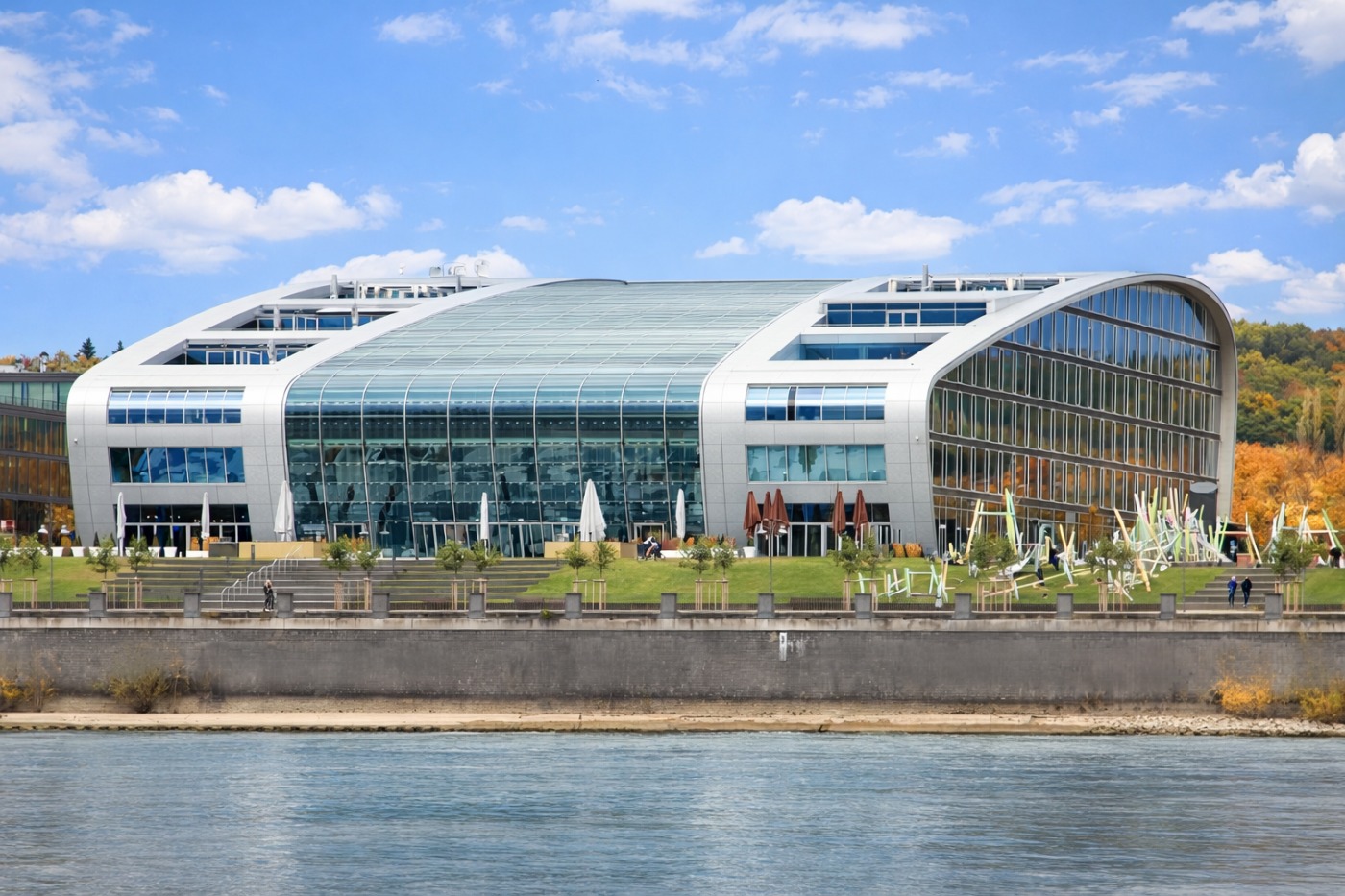
A house for travelers who see design, views, spa and gastronomy not as extras, but as part of a carefully composed hotel experience.
There are hotels that above all promise tranquility. And there are houses that work with their presence. The Kameha Grand Bonn clearly belongs to the second category: a design and lifestyle hotel directly on the Rhine, with generous architecture, clear visual identity and a dramaturgy that deliberately connects accommodation, culinary pleasure and event culture. The house communicates its Rhine location, 254 rooms and suites as well as eight event spaces across more than 2,500 square meters very assertively. Not as an afterthought, but as the core of its identity.
We were on site for two nights in mid-July, three days with temperatures above 30 degrees, and besides our own room we visited nearly all categories of the house. What stands out: the Kameha Grand Bonn has no interest in reproducing the discreet grand hotel narrative. It interprets urban luxury in contemporary terms, with panoramic views, generous spaces, wellness and a setting that works equally well for weekends and business events.
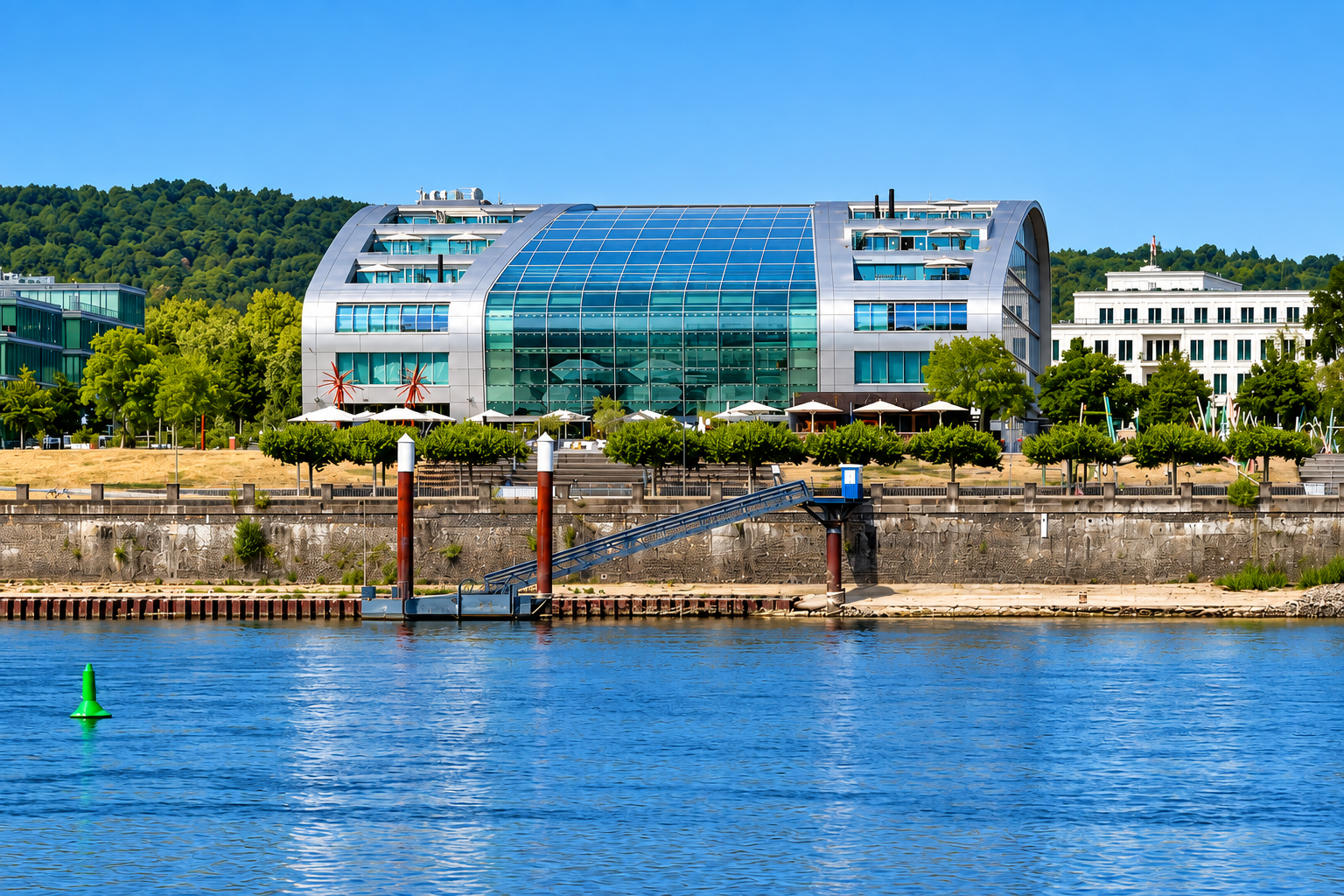
Directly on the Rhine: Location as mise-en-scène, not merely as coordinates
The location on the Bonner Bogen is far more than just an address for this hotel. The view of the Rhine, the openness of the surroundings and the distance from classical city hotel architecture give the stay its own atmosphere: less dense, instead airier and oriented toward expansiveness.
A practical observation that rarely appears in hotel descriptions: we arrived by public transport, which works without any problems—this house is not centrally located, however. You don't need a rental car for this house, even if the address on the map initially looks peripheral. Those traveling without a car lose nothing here except a few minutes.
The hall as overture: The house reveals its intention in the first minutes
Entering the lobby is the moment when Kameha Grand discloses its purpose. The hall is large, high and deliberately left empty, dominated by oversized lampshades that rhythm the space rather than illuminate it. The interior architecture is by Marcel Wanders, and you recognize his signature before you can name it.
What's remarkable is less the gesture itself than its effect. Despite its dimensions, the hall doesn't feel cold. You feel immediately welcomed, which is by no means a given in such large spaces. On the way to the rooms, the dramaturgy continues: the corridors are consistently rendered in bold red, a deliberate break with the neutrality one encounters in comparable houses. These corridors are not merely transit space, but part of the narrative.
The room as counterpoint to the bold gesture
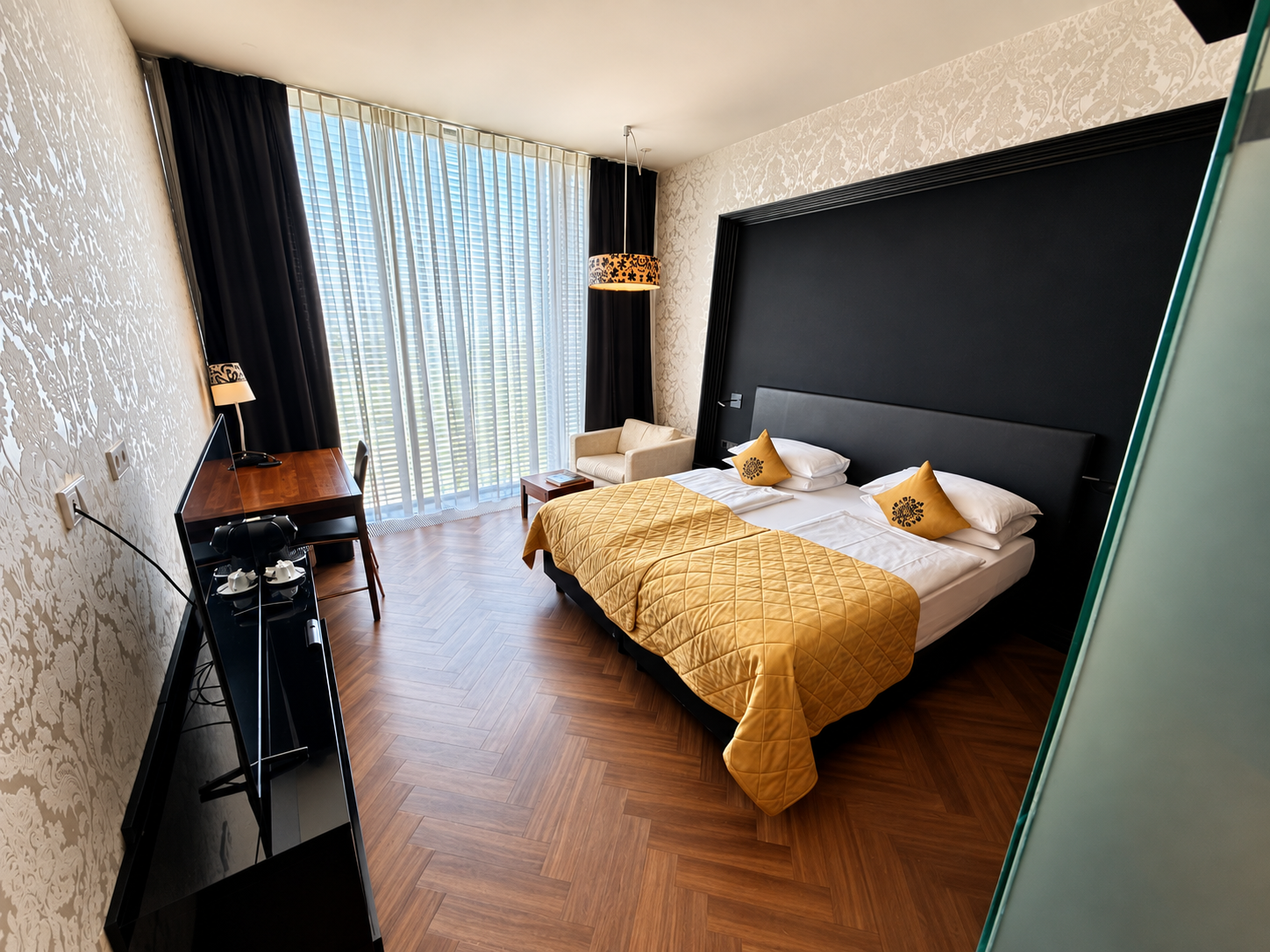
This is precisely where one of the house's strengths lies, something you wouldn't expect from the outside. We stayed in a Superior Room with partial Rhine views, and the contrast to the staging in the public areas was clear: very pleasant accommodation, good craftsmanship, but above all remarkable quiet.
This is relevant information for discerning guests. Houses that work so deliberately with presence often carry that energy right into the room. Here it's the opposite. The rooms dial back the tempo. And the entry-level category already delivers what one expects, even if the suites give the design considerably more space. Those who receive partial Rhine views get a substantial part of the experience without having to book the premium category.
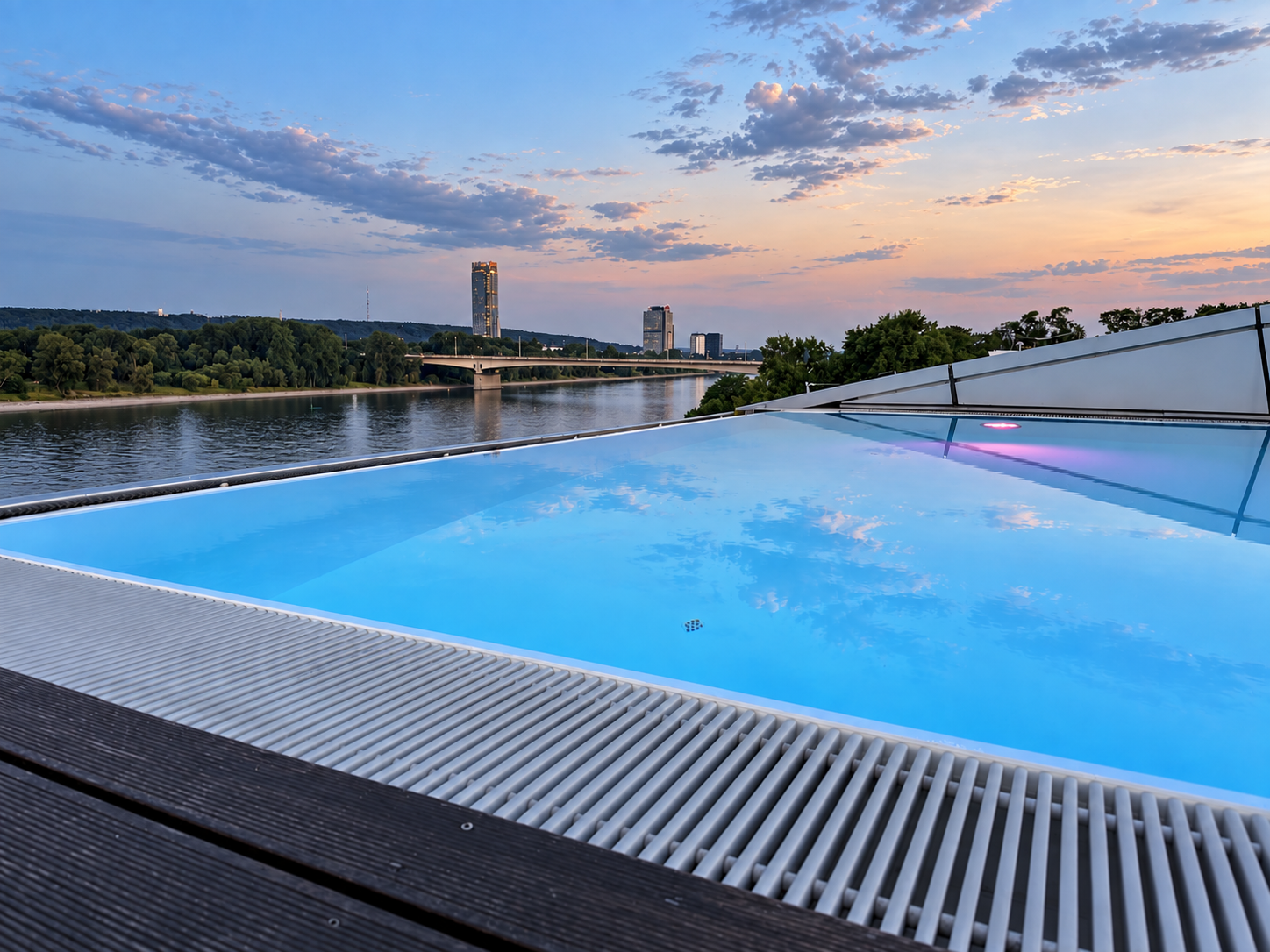
The true signature element: Spa & Powerhouse overlooking the Rhine
Particularly striking is the wellness area. The Spa & Powerhouse covers 730 square meters according to the hotel and combines fitness, saunas, steam bath, treatments and a heated infinity pool with views of the Rhine and the Siebengebirge.
Our honest assessment: At 730 square meters, the spa area feels more compact than the figure suggests. Everything necessary is present, well-maintained, and sensibly arranged, but anyone expecting an expansive spa landscape in the style of Alpine wellness hotels is measuring the property against the wrong category. The spa here is not a destination in itself, but rather a precisely calibrated element.
The pool, by contrast, is exactly what the brochure promises. We were in the water twice—at sunset and the following morning at six o'clock. Both times, hardly anyone else was there, the water was pleasantly warm in the summer temperatures, and the view of the Rhine completes the scene entirely. Luxury today is often created not through marble varieties or formality, but through the quality of a moment. At Kameha Grand Bonn, that moment exists up there, in the water, with an open sightline. The early morning is clearly the stronger time of day.
Culinary culture on two levels: from Michelin-starred restaurant to beer garden
A hotel becomes particularly interesting when its gastronomy is not merely infrastructure, but part of the travel decision. Kameha Grand Bonn plays this card on multiple levels: YUNICO with Japanese-Mediterranean cuisine under Christian Sturm-Willms, Ludwig's, the Stage Bar & Lounge, and RheinAlm directly on the riverbank.
We did not test YUNICO during this visit, so we abstain from judgment. Breakfast at Ludwig's, however, fits the overall picture: calm, understated, without the loudness of design. In the evening, we had a drink at RheinAlm, and this change of scenery is more revealing than it sounds. Just a few steps from the design hotel awaits a Bavarian-influenced beer garden culture directly on the Rhine.
This shift between Michelin-star dining, relaxed hotel restaurant, and beer garden is not a stylistic break, but rather the actual point of the house. Here you can set the tone of your evening yourself without leaving the property.
Event hotel with style: Why the property doesn't hide its scale
Many hotels try to conceal their functionality behind a softer narrative. Kameha Grand Bonn takes the opposite approach. It makes its event competence visible. Eight conference and event spaces and the glass-walled event hall Kameha Dome are not arranged at the edge of the property, but form part of its center.
We inspected parts of the facilities, and for event planners, one detail is particularly relevant: the circulation flow. The rooms are intuitively accessible from the lobby without a signage labyrinth or basement corridors. Aesthetically, they remain true to the house's concept rather than slipping into the usual neutrality of conference zones. This gives the hotel a social pulse. As a result, it doesn't feel like an introverted retreat, but rather like a place with movement and purpose.
Who Kameha Grand Bonn works especially well for
The property is especially suited to travelers seeking a distinctive lifestyle hotel: for a stylized weekend on the Rhine, for a stay with spa focus and views, or for a trip where architecture and atmosphere should consciously be part of the experience. It is equally compelling for guests who want to combine business with pleasure. The combination of room capacity, event space, bar and restaurant culture, and spa is precisely tailored to this multi-purpose use.
The hotel is less suitable for travelers seeking discreet, almost invisible luxury, and for guests whose journey revolves around an expansive spa. Kameha Grand Bonn is not a hotel of restraint. It thrives on presence, design, and impact. This is precisely why it is interesting, provided you read it in its own language and do not measure it against a different definition of luxury.
Conclusion: A hotel with character rather than mere shell
Kameha Grand Bonn is best understood not by comparing it to classical grand hotels, but by viewing it on its own terms. This logic reads as follows: Rhine location, design, views, spa, gastronomy, and event culture together form an experience that is deliberately visible.
After two nights on-site, one thought stands out above all: the strongest moments of this house are the quietest. A serene room beyond a bustling corridor. A pool at six in the morning, when the Rhine belongs to no one yet. Those seeking not merely correct accommodation in Bonn, but accommodation with character, will find an address here that aspires to be more than a place to stay. It wants to be a setting. And it succeeds most brilliantly in its finest moments.
Frequently Asked Questions about Kameha Grand Bonn
Is Kameha Grand Bonn easily accessible without a car?
Yes. We arrived by public transport, and the journey to the Bonner Bogen is straightforward. The address lies outside Bonn's city centre, which shapes the character of the house, but presents no mobility constraints.
Is the infinity pool really worth it?
It is the signature element of the house. The view of the Rhine and the Siebengebirge completes the scene entirely. It is most impressive during off-peak hours: at sunset and early morning around six o'clock, it was nearly empty during our visit.
How large is the spa area actually?
The Spa & Powerhouse encompasses 730 square metres according to the hotel, with fitness, saunas, steam bath and treatments. In practice, the area feels more compact than the figure suggests. Everything necessary is present, but it is not an expansive wellness landscape.
Is the hotel suitable for events and corporate functions?
Yes, and quite deliberately so. Eight event spaces spanning more than 2,500 square metres, as well as the glazed Kameha Dome, are integral to the house. The rooms are intuitively accessible from the lobby and remain consistent with the hotel's design concept.
Transparency Notice: Luxury Event Travel was on-site at Kameha Grand Bonn in mid-July for two nights as part of a self-requested site inspection. Our assessment is independent. Information on square metres, room numbers and facilities comes from the hotel; all observations regarding atmosphere, rooms, pool and circulation are based on our own visit.